Operational Checklist for Modern Automotive Service Centers: Integrating EV Readiness, Chemical Waste, and Workflow
Assessing Future-Proofing Risks: The Investor's Checklist for Automotive Service Centers
The automotive service center industry is undergoing a profound transformation, driven by stricter environmental regulations and the rapid adoption of electric vehicles (EVs). For property owners, investors, and asset managers, this shift represents a critical due diligence challenge. A facility that was perfectly compliant and profitable five years ago may face significant operational limitations or mandated capital expenditures (CapEx) today.
This checklist moves beyond simple operational guidelines. It is designed for the property owner and investor, focusing on identifying infrastructural gaps, compliance risks, and potential cost overruns that could devalue the asset or limit the tenant’s ability to operate profitably. Ignoring these elements means assuming a future liability that must be factored into your initial valuation.
Utility Capacity Due Diligence: Beyond the Service Hookup
When evaluating an auto service bay, the most immediate and often underestimated risk is the existing utility infrastructure. The transition to EVs and modern diagnostic equipment fundamentally changes the required electrical and gas load. Your primary goal here is not to determine what the tenant needs to run the shop, but to determine the cost and complexity of bringing that capacity online.
Electrical Load Assessment and Risk Profiling
The jump from traditional internal combustion engine (ICE) servicing to EV servicing is primarily an electrical load problem.
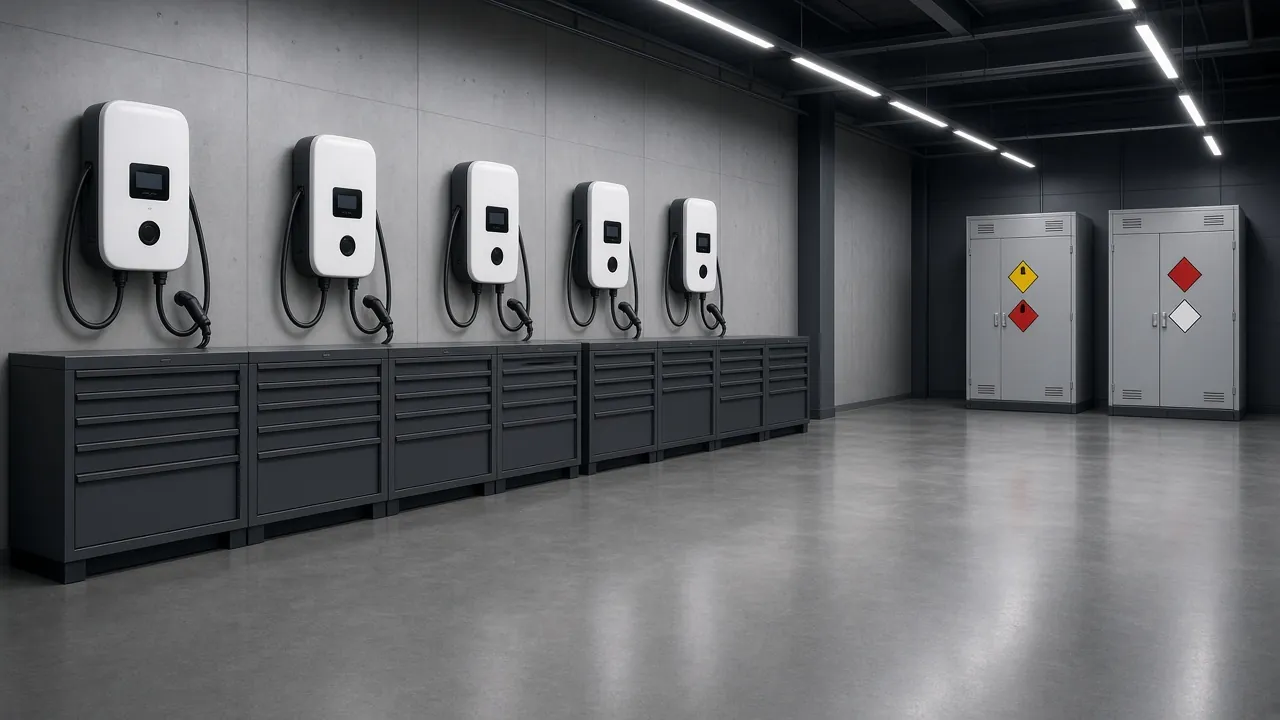
- High-Voltage (HV) Readiness: Does the property’s main service panel, transformer, and feeder lines have sufficient capacity for multiple Level 2 and DC Fast Chargers (DCFC)? Running several DCFC stations simultaneously requires massive, dedicated power that often exceeds the original zoning utility capacity.
- Three-Phase Power Verification: Always verify that the entire site is provisioned for three-phase power, as this is standard for heavy commercial machinery and diagnostic equipment.
Zoning and Code Compliance for Utility Upgrades
A key risk is that the zoning dictates utility limitations. A simple electrical upgrade may trigger mandated changes to the property’s parking lot lighting, drainage, or even setbacks, dramatically increasing the CapEx scope.
- Actionable Step: Consult with a structural engineer and a specialized commercial MEP (Mechanical, Electrical, Plumbing) consultant early in the due diligence phase. Do not rely solely on the seller’s existing utility bills.
Hazardous Waste Management: A Compliance Risk Assessment
Waste streams are not merely an operational cost; they are a significant zoning and environmental compliance risk for the property owner. Improper handling or insufficient space for waste management can lead to massive fines and operational shutdowns.
Secondary Containment and Zoning Requirements
Every facility handling fluids (oil, coolant, brake fluid, solvents) must demonstrate robust secondary containment. This is the physical barrier (usually concrete curbing or specialized sumps) designed to hold the entire volume of the largest stored container plus a mandated percentage of the total volume.
- The Property Owner’s Focus: Is the current layout adequate? Does the proposed service bay area have sufficient, dedicated, and easily accessible space for the mandated secondary containment units? If the current bays are configured poorly, the cost to re-engineer the floor plan to meet containment standards can be prohibitive.
- Drainage and Runoff: The property must manage chemical runoff. Are the floor drains designed to handle acidic or oily runoff, or are they simply standard storm drains? Specialized plumbing is required to prevent contamination of the municipal sewer system.
Waste Stream Logistics and Vendor Access
Compliance requires more than just a drain; it requires a clear, efficient logistics path for specialized waste removal.
- Oil and Fluid Collection: Ensure the property layout allows for easy, dedicated access for specialized waste vendors (e.g., those handling used oil or battery components). If the service bay is deep within the property and requires complex maneuvering for large tanker pickups, the operational flow is compromised.
- Battery Waste: The handling of spent EV batteries is a rapidly evolving, high-risk waste stream. The property must have designated, safe storage areas that comply with fire codes and material handling regulations until the specialized recycling vendor arrives.
Optimizing Workflow and Customer Flow: The Operational Layout Angle
From an investor standpoint, the efficiency of the physical layout directly translates to the tenant’s profitability and, consequently, the property’s Net Operating Income (NOI). A poor layout creates bottlenecks that limit revenue potential.
Bay Configuration and Future Scalability
Evaluate the bay structure not just for today’s needs, but for the next decade.
- Vehicle Maneuverability: Are the bays wide enough for modern, oversized vehicles (trucks, vans, specialty equipment) to maneuver and park safely? The minimum required width and depth must account for the largest vehicle expected to utilize the space.
- Dedicated Service Zones: The ideal layout separates functions: a clean reception/waiting area, a specialized EV/diagnostic zone, a high-volume service zone, and the back-end waste/storage zone. Mixing these zones creates cross-contamination risks and confuses customer flow.
- The Investment Takeaway: When assessing a property, look for evidence of phased development or modular design. A site that required a complete gut-rebuild to separate functions is inherently riskier and more expensive to invest in than one with a flexible, zoned structure.
Customer Experience and Digital Integration
The modern auto service bay is as much a retail experience as it is a workshop.
- Waiting Area Design: The property owner should assess the waiting area’s potential for modernization. Is there adequate space for digital check-in kiosks, consultation areas, and potential retail integration?
- Charging Integration: Beyond the service bays, consider the customer parking lot. The property must be prepared to handle customer EV charging needs, which adds both utility load and revenue potential (if managed correctly).
Financializing the Future: CapEx Budgeting and Valuation Adjustments
The most critical step for the property investor is translating these physical and regulatory requirements into a solid financial model. The assumption of a "turnkey" asset is often the most dangerous assumption an investor makes.
Budgeting for Hidden Infrastructure Costs
When calculating the total cost of acquisition and build-out, do not treat utility upgrades, zoning compliance, or waste infrastructure as "optional extras." They are core components of the operational budget.
- The "Black Box" Budget: Create a dedicated "Black Box" CapEx line item that specifically budgets for utility upgrades (transformer, feeder lines), environmental remediation/containment upgrades, and specialized HVAC/ventilation systems required for modern chemical handling.
- Contingency Fund: Given the rapid changes in EV technology and environmental law, a minimum 15–20% contingency fund on top of the estimated CapEx is non-negotiable.
Zoning and Permitting Risk
The zoning code is the ultimate arbiter of what can be built or modified. A property owner must verify that the current zoning permits the intended future use of the tenant, not just the current use.
- Actionable Due Diligence: Engage a local land-use attorney and a zoning specialist. They can verify whether the property can legally accommodate the necessary utility upgrades and waste handling systems without triggering costly re-zoning applications or setbacks.
Next step
Understanding these complex operational and compliance layers is essential for mitigating financial risk and maximizing long-term asset value. By treating EV readiness, specialized waste handling, and utility capacity as fundamental investment criteria—not merely tenant concerns—you can significantly reduce your exposure to unforeseen CapEx and regulatory penalties.
When you are ready to put this comprehensive due diligence workflow into practice, browse live listings to identify properties with favorable infrastructure profiles, or compare owner tools to understand the financial mechanisms required for property acquisition and management.
Ready to turn searches into booked jobs?
Real estate listings, owner tools, tenant workflows, and property operations in one platform.