Operational Checklist for Commercial Textile Manufacturing Facilities: Utility, Effluent, and Fiber Management
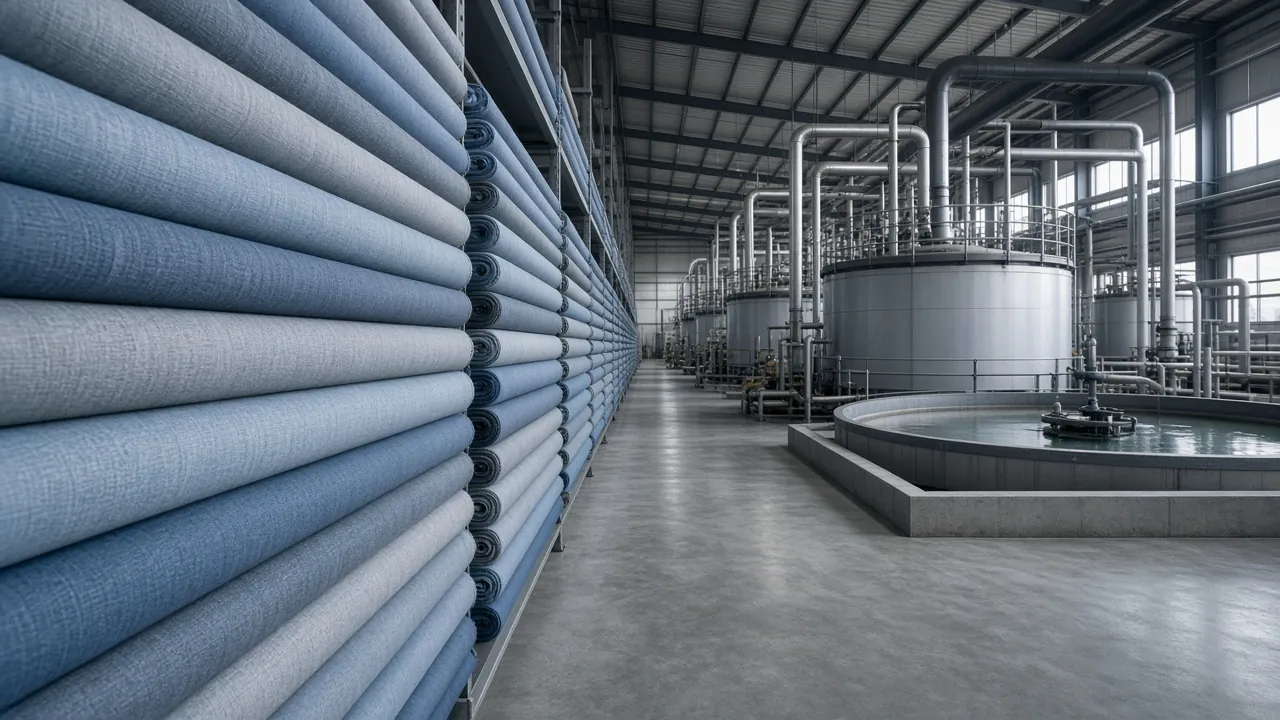
Immediate Operational Triage: The Three-Point Utility Audit
Before any major operational expansion or even routine maintenance, facility managers must conduct a targeted, three-point utility audit. Textile manufacturing is uniquely resource-intensive, making the efficiency of water, power, and waste streams the single greatest determinant of operational cost and regulatory risk. Do not wait for an incident (like a dye spill or a power brownout) to conduct this review. Start with these immediate, actionable steps:
1. Water System Integrity Check (The Leak Protocol):
- Action: Implement a systematic meter reading comparison. Compare the total water usage meter reading against the aggregate usage of major processes (dyeing, washing, steaming) over a 24-hour period.
- Tactic: Focus on non-process areas. Check cooling tower blowdown lines, grade sinks, and restroom fixtures. A small, continuous leak (e.g., a weeping joint in a main feed line) can account for thousands of gallons monthly and is often invisible without professional pressure testing.
- Checklist Item: Verify that all backflow prevention devices (e.g., air gaps, reduced pressure zone assemblies) are inspected and tested quarterly, as they are critical for preventing contaminated water ingress into municipal lines.
2. Power Consumption Mapping (The Peak Load Analysis):
- Action: Identify the peak power draw periods. Does the facility’s largest energy consumer (e.g., industrial dryers, large boilers) run simultaneously with other high-draw equipment (e.g., HVAC, material handling)?
- Goal: Stagger high-draw processes. If the boiler and the primary dyeing machine both hit peak load at 10:00 AM, the facility is unnecessarily stressing the electrical grid and risking costly service upgrades.
- Operational Step: Work with the utility provider and facility engineer to model optimal scheduling. Can the washing cycle be shifted to the afternoon to smooth the demand curve?
3. Waste Stream Identification (The Source Audit):
- Action: Map every point where a liquid or solid waste leaves the facility. Do not assume all waste is handled by the central plumbing system.
- Focus: Identify specialized streams: spent dye baths, chemical rinse water, sludge from filtration units, and particulate fiber dust. These streams require specialized handling protocols that differ vastly from general wastewater.
***
Optimizing Effluent Management and Chemical Compliance
The most significant regulatory and operational risk in textile manufacturing is wastewater effluent. Dye runoff, chemical residues, and high Chemical Oxygen Demand (COD) levels can lead to immediate fines, operational shutdowns, and severe reputational damage. Effective effluent management requires moving beyond simple compliance and adopting a circular, resource-recovery mindset.
Wastewater Treatment System (WWT) Protocol Checklist
This checklist guides the proactive management of the WWT, ensuring it operates at peak efficiency and remains ahead of evolving environmental regulations.
- Pre-Treatment Screening:
- Chemical Inventory and Usage Tracking:
- Sludge Management and Disposal:
- Monitoring and Reporting:
***
Managing Fiber and Solid Waste Streams
Textile production generates massive amounts of solid waste, primarily lint, off-cuts, and dust. Improper management of these materials creates fire hazards, OSHA compliance issues, and lost revenue opportunities.
Dust and Lint Mitigation Protocol
The management of airborne fibers and settled dust must be viewed through the lens of both safety and sustainability.
- Dust Collection System (DCS) Maintenance:
- Off-Cut and Scrap Material Handling:
- Air Filtration and HVAC Integration:
***
Utility Infrastructure Longevity and Resilience Planning
A textile facility is a complex, interconnected machine. Its operational longevity depends entirely on the reliability of its underlying infrastructure. Resilience planning means preparing for failures—whether they are weather-related (flooding, power outages) or equipment-related (boiler failure, pump breakdown).
The Infrastructure Resilience Checklist
- Redundancy Mapping: Identify every single single point of failure. If the primary boiler fails, what is the immediate backup? If the main electrical feeder trips, is there a dedicated, tested backup generator?
- Generator Testing Protocol: Generators are useless if they haven't been tested under load. Schedule quarterly, full-load transfer tests. Do not simply run the generator for 30 minutes; simulate the actual load profile of the facility (e.g., running the primary conveyor belts and the critical dyeing pumps).
- Preventative Maintenance (PM) Schedule: Move beyond reactive maintenance (fixing things when they break). Adopt a predictive PM schedule based on manufacturer recommendations and operational hours.
- Utility Service Agreements: Review all utility service contracts (water, gas, power). Understand the service level agreements (SLAs). What is the guaranteed response time for a major failure? Are there provisions for temporary alternative connections?
***
Operational Workflow Integration and Staff Training
The most sophisticated infrastructure is worthless if the staff are not trained to operate it safely and efficiently. The operational checklist must include human factors.
Training and Documentation Requirements
Standard Operating Procedures (SOPs) for Critical Systems: Every high-risk process (e.g., chemical dumping, boiler startup, dye bath loading) must have a written, step-by-step SOP. These documents must be accessible at the point of use* (e.g., laminated sheets near the control panel). Emergency Response Training: Staff must be trained not just on what to do, but who to call and how* to contain the incident. This includes spill containment drills for dyes and chemicals, and evacuation routes specific to utility failures.
- Cross-Training: Never rely on a single employee knowing how to operate a critical piece of equipment. Cross-train at least two individuals on the operation, minor troubleshooting, and shutdown procedures for every major system (e.g., the WWT, the boiler, the main electrical panel).
- Continuous Improvement Feedback Loop: Establish a formal mechanism for operators to report inefficiencies or potential risks. If an operator suggests that a certain valve is hard to reach or that a chemical mixing process is unnecessarily complicated, treat that suggestion as a high-priority engineering review item.
Effective management of these complex systems requires deep knowledge of local codes, utility engineering, and process chemistry. When considering a facility that requires this level of specialized operational oversight, understanding the full scope of the property is crucial. For a comprehensive view of available industrial assets, you can explore commercial properties for sale and lease.
Next step
When you are ready to put this workflow into practice and begin vetting potential facilities that meet these stringent operational requirements, browse live listings to see the current market inventory.
Ready to turn searches into booked jobs?
Real estate listings, owner tools, tenant workflows, and property operations in one platform.